
- Licensed & Insured
- Same-Day Available
- Free Estimates
- Fully Licensed & Insured
- Same-Day & Next-Day Service AvailableCall or text to check today’s openings
- Free Estimates — Text Us Photos
Fort Myers Junk Removal removes one standard passenger-vehicle tire in Lee County, starting at $99.
Starting at $99
One standard passenger-vehicle tire; specialty, oversized, or multiple tires are quoted separately
- Included
- Labor, lifting/loading, haul-away, transportation, and standard disposal/recycling fees for the described item
- What changes the price
- Size/weight, quantity, pickup access
- Add-on charges
- Quoted before work for unusual access, extra-heavy/oversized handling, disassembly, or non-standard disposal when applicable
We collect loose passenger tires and wheel assemblies, including tires with rims still attached. Give us the count and point out any oversized truck or equipment tires.
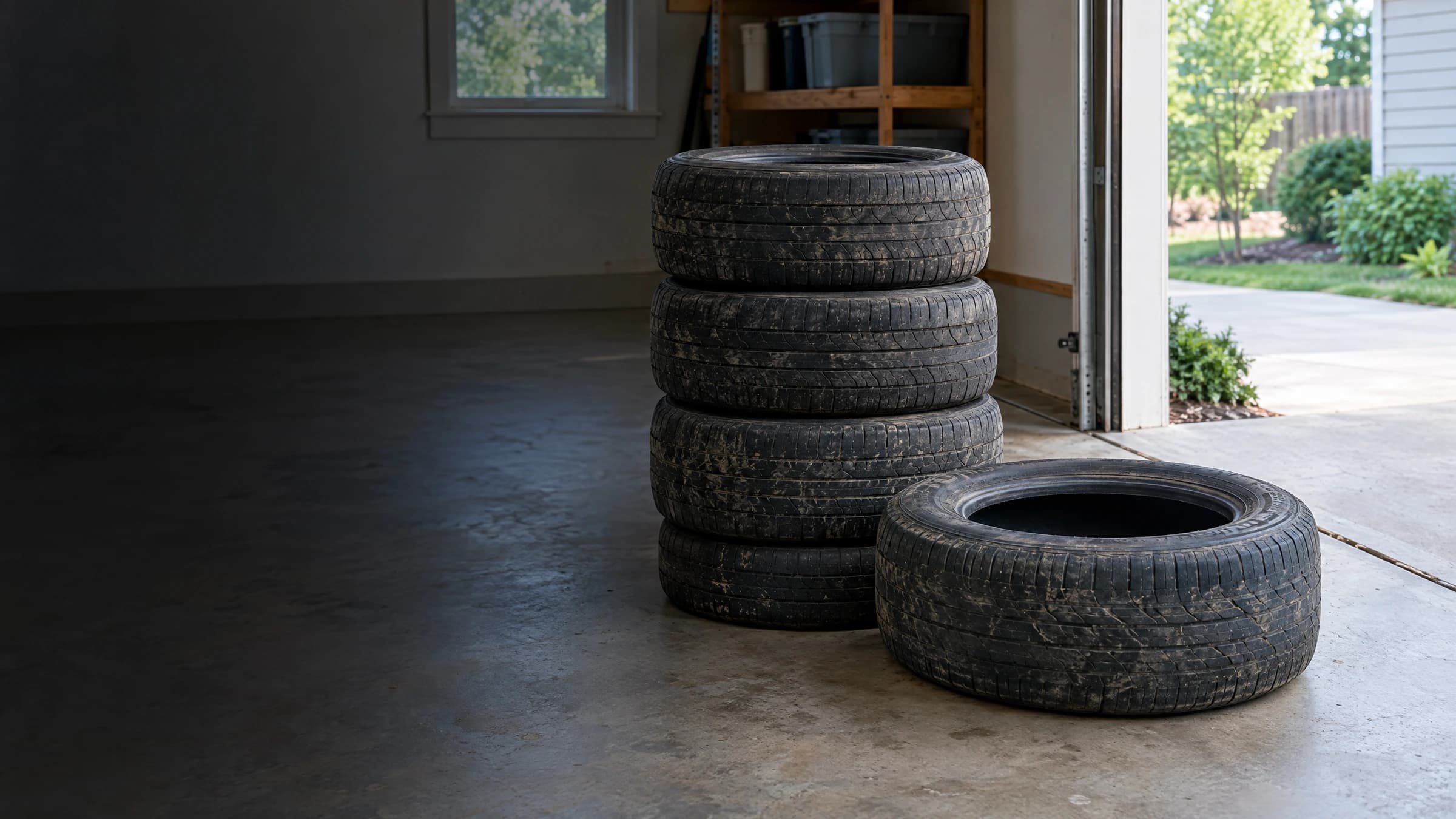
A few garage tires and a large outdoor stockpile are different jobs. Leave heavy or unstable stacks alone, and describe contamination or other waste mixed into the pile. This is tire hauling, not vehicle servicing or a public drop-off location.
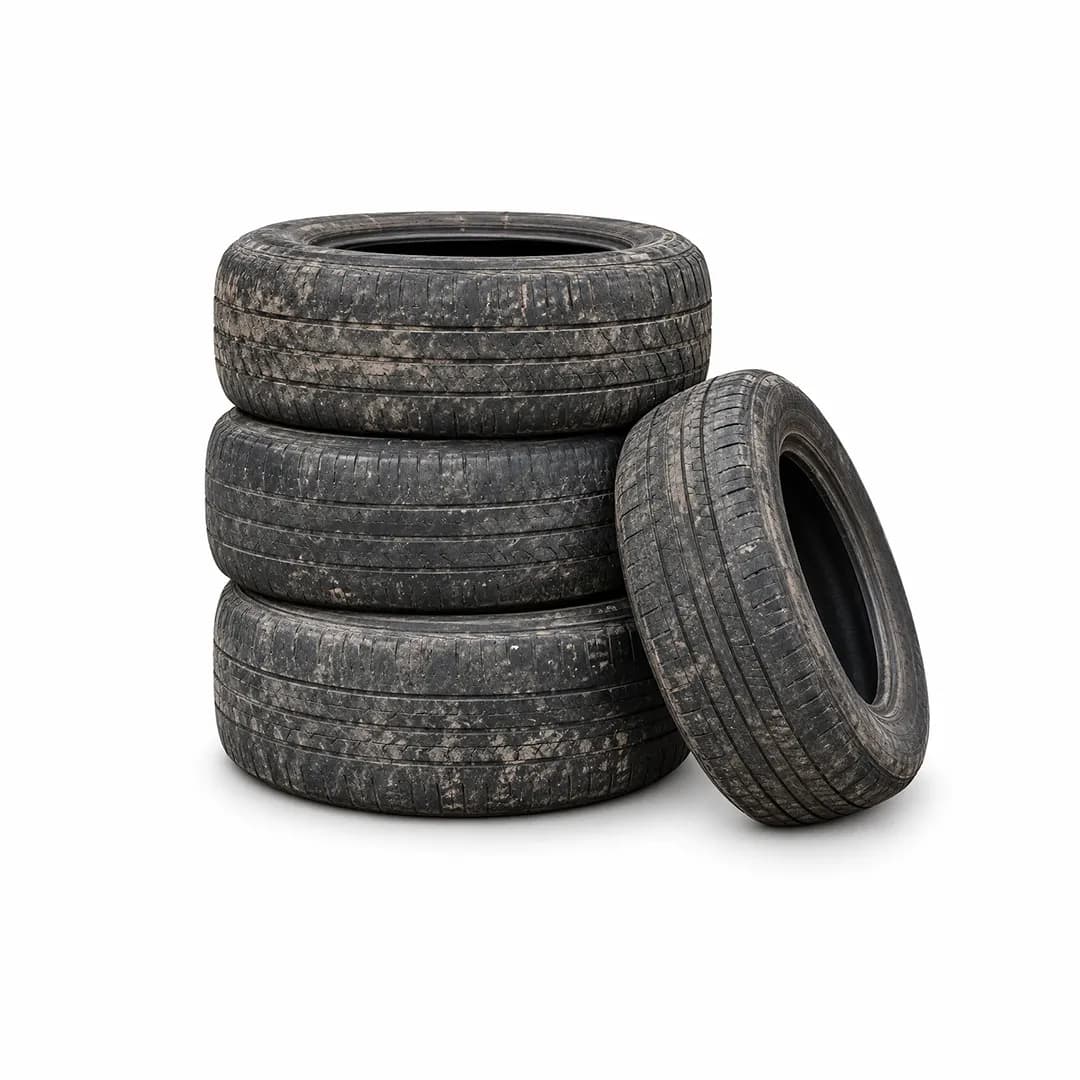
Keep tires, parts and vehicles separate in the request.
Tell us the tire count and type so we can check acceptance and handling. Tire pickup does not include towing or removing the vehicle.
Tires, wheels and detached parts
Count tires and explain whether they remain on wheels. Identify car parts, floor jacks and other heavy pieces separately, with any fluids or batteries disclosed. Loading and receiving requirements must be confirmed for the actual quantity; do not assume tire removal is covered by an ordinary household quote.
Vehicles and powered carts
Old boats, jet skis and their trailers have their own page: old boat removal. For motorcycles, ATVs, go-karts, golf carts, RVs and campers, title, ownership, batteries and fuel shape the job, so send photos and we’ll plan it. Junk-car towing and cash-for-cars are separate services. For a whole vehicle, call us and we’ll tell you how it gets handled.
Count tire casings and identify complete wheel assemblies.
A tire mounted on a rim is heavier than the empty casing and may roll or balance differently during handling. Include the rim in its description; you do not need to remove it for pickup.
Count every tire, including those concealed behind the visible front row, without climbing on a stack. Quantity affects the receiving and transport arrangements, so a rough photograph should not substitute for an accurate inventory.
Water and mixed debris can be hidden inside a tire.
Outdoor tires can hold water, mud and loose debris in their sidewalls. Describe those contents and any unusual contamination without stirring or spreading material. Keep unrelated waste identified separately rather than treating everything under the pile as tires.
Mounted wheels must first be removed from vehicles by a tire shop or mechanic. Vehicle lifting, tire fitting and towing are outside this collection service.
A rear-yard stockpile creates more handling than a garage stack.
Gate width, terrain and carrying distance affect how tires reach loading. At a business or managed property, identify the person authorizing disposal and the permitted loading area. Oversized tires and heavy rims need their actual dimensions considered.
If tires are part of a garage cleanout, list their count separately. Their disposal stream and transport requirements remain distinct from the furniture and boxes around them.
Check the tire seller’s old-tire arrangement first.
When replacing tires, ask the seller whether taking the old ones is included. For a small household quantity, check the collection provider serving your address for its current tire, rim and quantity rules before setting them out.
Our collection is useful when carrying and transportation are the problem or loose tires are part of a larger removal. Keep the complete count and type clear so the appropriate receiving route can be arranged. Our Lee County disposal guide lists the curbside tire limits and where residents can drop tires off.
Count, rims and tire size affect the quote.
Passenger casings, heavy wheel assemblies and oversized equipment tires take different effort and transport space. Water, mixed debris and a long carry add handling. Large stockpiles require transport arrangements suited to the quantity rather than being treated as a routine household load.
Identify any additional tires before collection. A quote for a known passenger-tire count does not describe an expanding mixed stockpile.
Curbside rules for tire removal and differ across Lee County
- Unincorporated Lee County: up to two car tires a week at the curb.
- Cape Coral: tires go as bulk, off the rim.
From each jurisdiction’s official collection pages, checked October 13, 2026. We carry it out from wherever it sits, anywhere in Lee County.
Where it can go in Lee County
If you’d rather handle some of it yourself, or it’s still worth giving away, these are the local options. Each organization decides what it accepts, so check with them before you load the car.
- Lee County curbside service takes up to two car tires a week in unincorporated areas; larger tires go to the county’s Buckingham facility. Source: Lee County Solid Waste: curbside service
- Florida requires anyone transporting more than 25 waste tires to be a registered waste tire collector. Source: Florida DEP: registered waste tire collectors
Checked October 13, 2026.
Show the pile with a rough count, and whether the tires are still on rims. Text Photos for a Free Estimate
Questions about tire removal and disposal
Related to tire removal and disposal
Tire Removal and Disposal throughout Lee County
Send photos and the pickup address for an estimate. See our Lee County service-area guide for local access, building coordination and ZIP coverage.
Get a tire removal and disposal estimate
Send a few photos and the pickup address. Tell us about stairs, gates or anything else between the items and the truck. We serve Lee County and will talk through the job with you before agreeing on a pickup date.
Service information updated October 14, 2026.