
- Licensed & Insured
- Same-Day Available
- Free Estimates
- Fully Licensed & Insured
- Same-Day & Next-Day Service AvailableCall or text to check today’s openings
- Free Estimates — Text Us Photos
After a hurricane or tropical storm, we haul away what the storm left behind: branches and palm fronds, broken fencing, a collapsed screen enclosure, soaked carpet and drywall, and damaged furniture and appliances. We come once the property is safe to reach and work in, and we carry debris out from the backyard, the lanai or inside the house, which public curbside collection doesn’t do.
Text photos of the debris and how we’d reach it for a free estimate. Photograph the damage for your own records first.
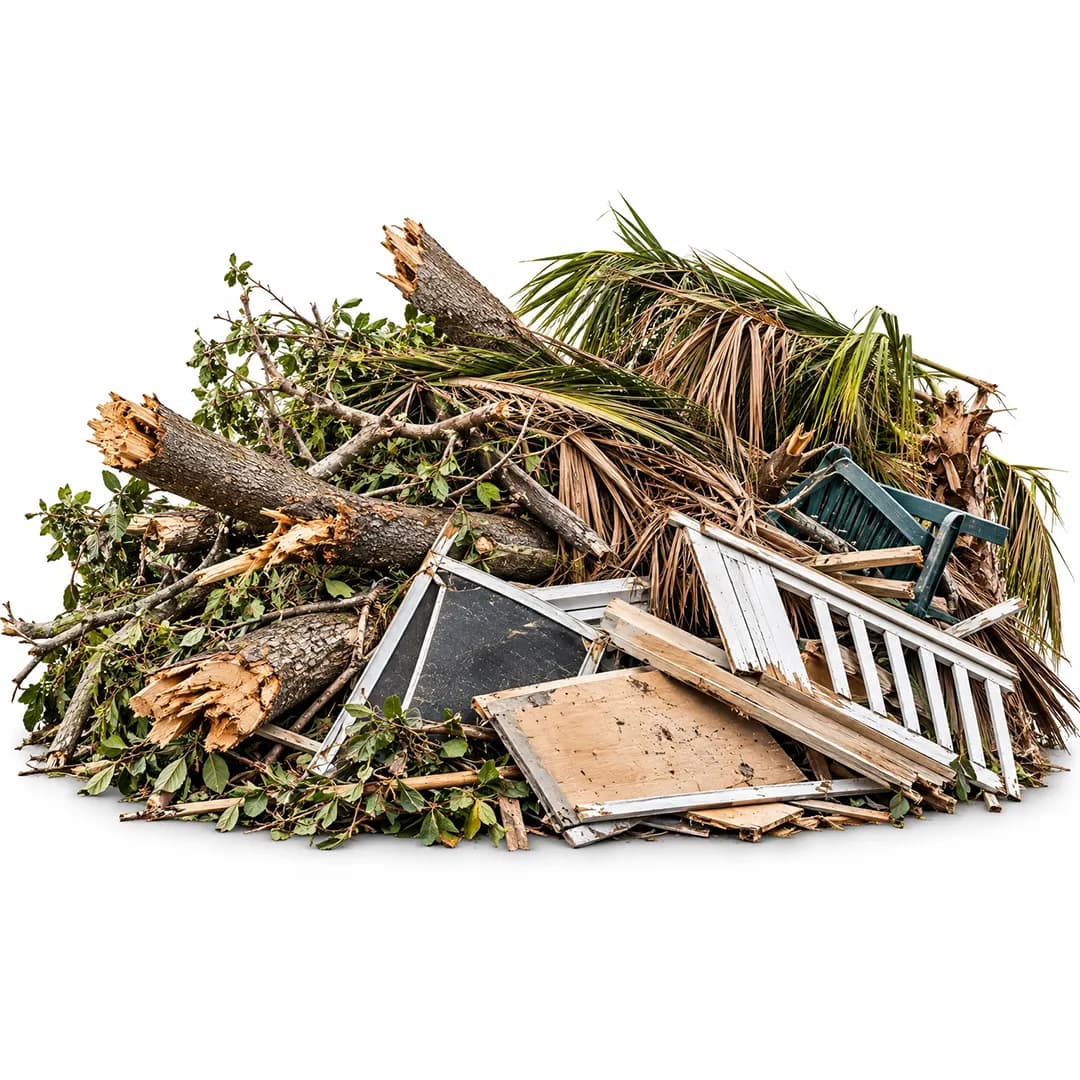
What we haul after a storm
Downed branches and palm fronds, broken fence sections, storm-damaged lanai and patio furniture, a screen enclosure or pool cage that came down (we can take down what’s left once it’s safe to work around), wet carpet, padding and drywall that has already been cut out, ruined mattresses and furniture, and appliances that have been emptied and disconnected.
Put it all in one request, even if it’s mixed. Tell us about anything that got wet, anything leaking, and anything you can’t identify.
County pickup or a private hauler?
After a declared storm, Lee County and the cities run their own debris programs. Their crews collect only from the right-of-way, usually in separate unbagged piles, on their schedule, and condos, apartments and mobile-home parks are often treated as commercial property that arranges its own cleanup. Our storm debris guide has the rules for each city, with dates and sources.
Public collection is the better deal when you can get your debris to the curb and wait. A private hauler helps when the debris is inside, behind a gate or across the yard, when it’s mixed, when the property is a condo or rental, or when you’re away and need someone to handle it.
Insurance and documentation
Photograph the damage before anything leaves. We document our work with before-and-after photos and an invoice, and we can communicate with your property manager or restoration company. Questions about what your policy covers go to your insurer.
What happens first
Unsafe structures, floodwater, downed power lines and debris in canals need the right specialist or utility first. Water mitigation, drying, mold treatment, sewage cleanup, roof work and structural demolition are done by those specialists, and sewage-contaminated contents and flood-damaged lithium batteries go a separate route from an ordinary load. If part of your job needs one of those first, tell us, and we’ll plan our part around it.
What changes the price
How much there is, how heavy it is (wet carpet, drywall and furniture weigh far more than they look), and how far it has to be carried. Debris already at the driveway is quicker than debris behind the house. You get a written price before work starts, and if the pile grows or shrinks before pickup, we adjust it with you first. See how pricing works; for ordinary yard waste with no storm damage, see yard debris removal.
Questions about storm debris removal
Storm Debris Removal throughout Lee County
Send photos and the pickup address for an estimate. See our Lee County service-area guide for local access, building coordination and ZIP coverage.
Get a storm debris removal estimate
Send a few photos and the pickup address. Tell us about stairs, gates or anything else between the items and the truck. We serve Lee County and will talk through the job with you before agreeing on a pickup date.
Service information updated October 14, 2026.